


Al-Oqilat Photographs
Table of Contents (select a name to jump to it):
- Prince Muhanna bin Saleh Aba Al-Khail
- Sheikh Fawzan Al-Sabiq, an Al-Oqilat scholar, writer, and historian
- Sheikh Hassan bin Muhanna Aba Al-Khail, one of the Al-Oqilat
- Al-Oqilat man Ibrahim bin Sulaiman Al-Jarboa
- Sheikh and leader Prince Mohammed bin Abdullah Al-Bassam, one of the Al-Oqilat
- Mohammed bin Abdullah Al-Mudaifer, one of the Al-Oqilat
- Al-Oqilat man Ali bin Ibrahim bin Muhammad Al-Rabdi
- Al-Oqilat man Yahya bin Abdulrahman Al-Shuraidah
- Al-Oqilat man Abdulrahman bin Muhammad bin Hamoud Al-Bazai
- Hamad bin Abdullah bin Hamoud Al-Bazei, one of the Al-Oqilat
- Al-Oqilat man Abdullah Aba Al-Khail
- Sulaiman Al-Hassan, one of the Al-Oqilat
- Al-Oqilat man Hamoud bin Muhammad Al-Mutlaq
- Al-Oqilat man Saab bin Saleh Al-Tuwaijri
- Al-Oqilat man Saleh bin Saab Al-Tuwaijri
- Major General Prince Mohammed bin Abdullah bin Turki Al-Otaishan, one of the Al-Oqilat
- Al-Oqilat man Ibrahim bin Abdulrahman Al-Humaidi (Al-Nashmi)
- Al-Oqilat man Saleh bin Sulaiman Al-Jarboa
- Abdullah bin Abdulrahman Al-Hunaishil, one of the Al-Oqilat
- Abdullah bin Sulaiman Al-Qurait (Qudaih), one of the Al-Oqilat
- Al-Oqilat man Saleh bin Sulaiman Al-Jarboa
- Al-Oqilat man Muhammad bin Ali Al-Shuwairikh
- Sulaiman Al-Jarbou‘, one of the Al-Oqilat
- Al-Oqilat man Ibrahim Al-Rashid Al-Humaid
- Abdullah Hamad Al-Shuraidah, one of the Al-Oqilat
- Al-Oqilat man Fayez Ali Al-Fayez
- Al-Oqilat man Saleh Hamad Al-Mohsen
- Al-Oqilat man Abdulaziz bin Muhammad bin Othman Al-Ubaid
- Al-Oqilat man Othman Al-Dubaykhi
- Abdullah Al-Fallah, one of the Al-Oqilat
- Ibrahim Abdullah Al-Nassar, one of the Al-Oqilat
- Al-Oqilat man Nasser bin Aqil Al-Rawaf
- Abdullah Mohammed Al-Judai‘, one of the Al-Oqilat
- Al-Oqilat man Sulaiman bin Muhammad Al-Shuwairikh
- Al-Oqilat man Ibrahim bin Muhammad Al-Owaid
- Hamad Mohammed Al-Fallah, one of the Al-Oqilat
- Humaid bin Mohammed Al-Fallah, one of the Al-Oqilat
- Al-Oqilat man Hamad bin Muhammad Al-Hussein Al-Tamimi
- Al-Oqilat man Abdulaziz Al-Dubaykhi
- Al-Oqilat man Fayez Al-Qulaish
- Rashid Al-Nuqair, Muhammad Al-Fayez, Muhammad Al-Souh, Ali Aba Al-Khail
- Hassan Al-Ajaji, Muhammad Al-Shuwairikh, Fahd Al-Ajaji, Muhammad Al-Ajaji
- Sheikh Sulaiman Al-Rumaih, one of the Al-Oqilat
- Mazeed Ibrahim Al-Khataf, one of the Al-Oqilat
- Al-Oqilat man Saleh Al-Hulaisi
- Al-Oqilat man Nasser Ali Al-Fayez
- Al-Oqilat man Muhammad Al-Dubaykhi
- Al-Oqilat man Muhammad Al-Fayez
- Abdullah bin Wayel Al-Tuwaijri, one of the Al-Oqilat
- Ibrahim bin Abdullah Al-Ruqeibah, one of the Al-Oqilat
- Al-Oqilat man Barak bin Othman Al-Dubaykhi
- Abdullah Abdulaziz Al-Rumayyan, one of the Al-Oqilat
- Al-Oqilat man Saleh Abdulaziz Al-Fayez
- Al-Oqilat man Rumayyan bin Saleh Al-Rumayyan
- Al-Oqilat man Jarallah Saleh Al-Buraidi
- Sulaiman Abdulrahman Al-Hadiyah, one of the Al-Oqilat
- Al-Oqilat man Muhammad bin Yusuf Al-Sayifi
- Fahd bin Abdullah Al-Wuhaibi, one of the Al-Oqilat
- Al-Oqilat man Muhammad bin Fahd Al-Shuraidah
- Abdullah bin Fahd Al-Shuraidah, one of the Al-Oqilat
- Al-Oqilat man Abdulaziz bin Fahd Al-Shuraidah
- Sulaiman bin Fahd Al-Shuraidah
- Abdullah bin Mansour Al-Shuraidah
- Abdullah bin Hamad Al-Fallah
- Muhammad Al-Saleh Al-Sudairi
- Khalil bin Ibrahim Al-Rawaf
- Muhammad bin Ali Al-Wuhaibi
- Rashid bin Abdulrahman Al-Humaidhi
- Abdulaziz bin Humaidan Al-Wuhaibi
King Abdulaziz, the hero of the Arabian Peninsula—may Allah have mercy on him—held the Al-Oqilat in high regard. He welcomed them, valued their counsel, appointed some as governors of regions and others as his representatives abroad, and supported them at home and overseas. May Allah grant him His vast gardens. By Allah’s grace, and then through his efforts, the Kingdom came to enjoy prosperity and security after hardship, fear, and hunger.

The renowned Al-Oqilat poet, the shrewd political poet of Najd, said: Mohammed bin Abdullah Al-Ouni:
And you see Sheikh Qandil Al-Wata *** With glory, the Sunnah, and knowledge of its Book
Generous deeds, firm resolves, and hard-won gains— / He traveled the paths of praise and right guidance.
He is the imam, son of the just imam; / He is the ruler of rulers and their champion.
He is Faisal's heir, and Turki his grandfather; / He is Abu Faisal, noblest of her sons.
1—Prince Muhanna bin Saleh Aba Al-Khail
Buraidah Palace, which he built after 1280 AH.

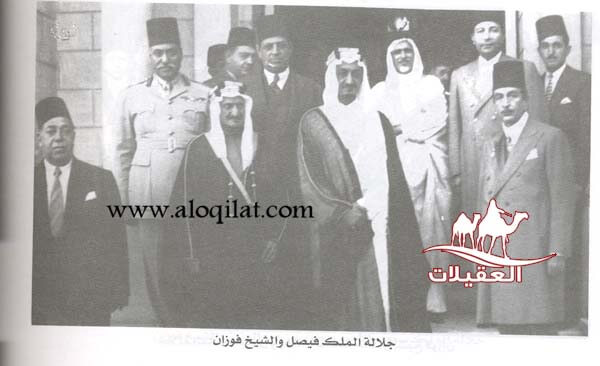
2—Sheikh Fawzan Al-Sabiq, an Al-Oqilat scholar, writer, and historian
A well-known emir of the Al-Oqilat. May God have mercy on him; he was generous, courageous, devoted to goodness and those who practiced it, and known for selflessness, knowledge, sound judgment, discernment, and capable management. He was born in Buraidah in 1275 AH and died in Cairo, Egypt, in 1373 AH. He memorized the Quran and perfected its recitation under Sheikh Sulaiman bin Muhammad Al-Saif, and learned reading and writing in the kuttab of Sheikh Nasser bin Sulaiman Al-Saif. He studied under Sheikh Sulaiman bin Ali Al-Muqbil and Sheikh Muhammad bin Omar bin Sulaim, traveling in pursuit of knowledge to Riyadh, Kuwait, Al-Zubair, and then India.
After returning from his pursuit of knowledge, he began trading in camels, horses, and general merchandise. They bought from Najdi markets or Bedouin communities and drove the animals to the Fertile Crescent, from the Euphrates to the Nile—Kuwait, Iraq, Syria, Jordan, Palestine, and Egypt.


Sheikh Fawzan Al-Sabiq and Mr. Charles Crane

3—Sheikh Hassan bin Muhanna Aba Al-Khail, one of the Al-Oqilat
An emir of the Al-Oqilat. His father Muhanna was renowned for transporting pilgrims from Iraq in 1265 AH.

4 — Al-Oqilat man Ibrahim bin Sulaiman Al-Jarboa
A well-known emir of the Al-Oqilat, proverbial for his knowledge of routes, water sites, and wells. One account relates that he flew from Riyadh aboard a Dakota aircraft. During the flight the pilot headed southwest; Sheikh Ibrahim noticed and said: ‘Your pilot has lost the route.’ They informed the pilot, who admitted it was true. Sheikh Ibrahim said: ‘The route is northwest.’ The captain remarked: ‘You have a great, alert mind.’

5—Sheikh and leader Prince Mohammed bin Abdullah Al-Bassam, one of the Al-Oqilat
An emir of the Al-Oqilat and one of their leading merchants in the Arabian Peninsula and other Arab lands. He was born in 1250 AH and died, may God have mercy on him, in 1350 AH.
He was renowned for generosity, and his reputation reached rulers. During the reign of Muhammad bin Abdullah Al-Rashid, he passed through Hail and came to greet the emir. In the gathering, the emir teased Sheikh Muhammad Al-Bassam: ‘Muhammad, with all your generosity and gifts, are you seeking to rule?’ He replied: ‘Your Highness, ruling requires people suited to it. I am a merchant seeking profit. When ten returns twenty, we give from God's bounty to the people. That is our gain from trade and distant journeys.’
May God have mercy on him. He was seated at his table at home in Damascus with his guests when a letter arrived. He read that he had suffered ruin in the currency market and, after Germany's fall, owned nothing. He nevertheless continued sitting with his guests as though nothing had happened, so as not to trouble them. This reflected the nobility, generosity, and patience of Abu Abdullah Al-Tamimi.
* After the sheikh died in Baghdad in 1350 AH, the government printed newspapers in black for several days as an expression of mourning.
To his left are the Deputy Supervisor of Education in Damascus and Sheikh Mohammed Al-Osaimi, one of the Al-Oqilat merchants. The photograph was taken in 1345 AH.

6—Mohammed bin Abdullah Al-Mudaifer, one of the Al-Oqilat
One of the leading Al-Oqilat figures, he was known for generosity, courage, chivalry, integrity, and his knowledge of routes and water sources. He was nicknamed “Aqqar” for his exceptional generosity—may Allah have mercy on him. He enjoyed high standing with the governors of the Northern Borders, excelled in trade, and was blessed with sons including the respected Sheikh Musaed, a man of generosity and benevolence. May Allah grant him a long life.

7 — Al-Oqilat man Ali bin Ibrahim bin Muhammad Al-Rabdi
One of the leading Al-Oqilat merchants and distinguished figures, widely respected for his sound judgment. To his right is his son, Sheikh Abdullah bin Ali bin Ibrahim bin Muhammad Al-Rabdi; may God have mercy on them. The photograph was taken in the Levant in 1328 AH / 1910. From childhood until his death in 1385 AH / 1965, Sheikh Abdullah spent most of his life traveling between the Levant and Buraidah.

8 — Al-Oqilat man Yahya bin Abdulrahman Al-Shuraidah
An emir of the Al-Oqilat. May God have mercy on him; he was courageous and wise, possessed sound judgment, and knew the routes and water sources. Photograph from 1385 AH. When his brother Muhammad, the courageous horseman, was martyred in the Battle of Jarrab beside King Abdulaziz, the King came to Buraidah to console their father, Abdulrahman Al-Shuraidah. In a statement showing his humility and noble regard for his companions, the King said: ‘I shall take Muhammad's place,’ to console the father. May God have mercy on him for such humility.

9 — Al-Oqilat man Abdulrahman bin Muhammad bin Hamoud Al-Bazai
A renowned Al-Oqilat man, known for generosity, courage, and sound judgment. Broadly educated, he knew the tribes and families and possessed a deep understanding of politics. He traveled with the Al-Oqilat to Kuwait and Iraq and journeyed west to Jordan, the Levant, Palestine, and Egypt for trade. He was born in Al-Rubay'iyah in 1318 AH and died in Riyadh in 1394 AH.
At the age of fifteen, he took part in the Battle of Jarrab with Ibn Saud's army against Ibn Rashid.

Sulaiman Al-Muhammad Al-Nuqaidan wrote in Poets of Buraidah, vol. 1, first edition, 1409 AH: ‘Abdulrahman Al-Bazai, may God have mercy on him, lived in Al-Jawf forty years ago. He was extraordinarily hospitable and spent without counting, yet the income from his trade exceeded what he spent. He maintained three diwaniyahs in Al-Jawf: one for Aqeel, another for the people of Al-Jawf, and a third for the Bedouin. Their fires never went out by night or day. When Al-Bazai left Al-Jawf for Buraidah, these diwaniyahs closed. Popular literary activity was almost paralyzed, and people felt the emptiness keenly. Muhammad Al-Bahouth then said in a long poem:’
Al-Jawf after Al-Bazai feels empty, / Even if they opened shops throughout Al-Jawf.
There was no person there who was not close to me; / I held affection and regard for every one of them.
O home, where is the man who bore the heavy burdens, / The one who remained with you through hardship and ease?
I praise God for the day the family prospered, / Until trade returned twenty for every ten.
His business continued in this manner for more than twenty years, bringing him great wealth and a fine reputation. Longing for Al-Qassim then drew him home. With several Al-Oqilat colleagues, he took part in an idea that seems to have been ahead of its time: around 1365 AH they founded a joint-stock agricultural company, though it did not succeed, as the accompanying document shows.


10—Hamad bin Abdullah bin Hamoud Al-Bazei, one of the Al-Oqilat
An Al-Oqilat man who traveled to Kuwait and Iraq and journeyed west to Jordan, the Levant, Palestine, and Egypt for trade. He was born in Buraidah in 1335 AH and died in Al-Jawf in 1411 AH.
He participated in the Yemen War, then worked with his cousin Abdulrahman Al-Bazai in Al-Jawf.
He traded camels between Arab countries and Arabian horses with pashas and the British in Egypt, as well as with Bedouin communities in the Levant and Iraq, forming close relationships with their leading figures. He left this trade after the establishment of Israel separated Egypt from the Arab East and motor vehicles came into use. He is said to have been among the first to own a car in the north. He then worked in commerce in Turaif for a time before returning to Al-Jawf, where he established a power station to provide the city with electricity.
11 — Al-Oqilat man Abdullah Aba Al-Khail
A well-known Al-Oqilat merchant who owned horse stables in Egypt. This photograph was taken after his horse won a race, in 1355 AH.

Sheikh Abdullah Aba Al-Khail and his brother Saleh receiving the trophy at a racetrack in Egypt, 1355 AH.

12—Sulaiman Al-Hassan, one of the Al-Oqilat
An Al-Oqilat merchant who owned a horse stable in Egypt. This photograph was taken after the horse won the race, in 1344 AH.

13 — Al-Oqilat man Hamoud bin Muhammad Al-Mutlaq
A well-known Al-Oqilat man, noted for wisdom, sound judgment, courage, and generosity. From Unaizah, he journeyed west from Najd with the Al-Oqilat toward Egypt in 1329 AH / 1908. May God have mercy on him; many Najdis trusted him as an arbiter, leaving their valuables and money with him when traveling or turning to him to dissolve partnerships, because of his integrity and ability to settle disputes by mutual consent. In Egypt he trained and bred racehorses and was among the leading trainers of the period. He was known for weaving and wearing the qasab agal. His majlis was renowned for hospitality and generosity, welcoming visitors arriving from Najd—especially Al-Qassim—at any hour and hosting them for several days. He exchanged many letters with King Abdulaziz, may God bless his resting place, keeping him informed about the Arabian Peninsula and its people. His only son Muhammad worked in training and breeding racehorses in Egypt from childhood, as did his grandson Mahmoud, who inherited and mastered the profession through his father and grandfather. Both continue to live in Cairo.

His horses competed in races in Egypt. Photograph from 1341 AH.

14 — Al-Oqilat man Saab bin Saleh Al-Tuwaijri
A well-known Al-Oqilat man, noted for wisdom, sound judgment, courage, and generosity. He journeyed west with the Al-Oqilat and settled in Egypt's Ain Shams district in 1329 AH; a street was named after him—Saab Saleh Street. He was so renowned for generosity that residents of Ain Shams and Kafr Farouk lined up before his house to draw water from its well. Two pumps met the community's need for clean water. He owned a stable with more than one hundred purebred Arabian horses for racing and breeding. His eldest son Saleh began working with him at age ten and had taken full charge by age fourteen.

15 — Al-Oqilat man Saleh bin Saab Al-Tuwaijri
A well-known Al-Oqilat man, noted for wisdom, sound judgment, courage, and generosity. He was the most celebrated racehorse trainer in the Arab world. His stable held more than 120 outstanding horses. His reputation extended beyond Egypt: he entered races in Lebanon and Greece, achieving leading places and winning trophies at their racecourses. He ranked as Egypt's leading trainer for more than a quarter-century and trained many accomplished trainers and jockeys. He was known for seriousness and dedication at work and for his good humor socially. His son Sulaiman now manages the stable and trains its horses. He died in Cairo in 1996.

16—Major General Prince Mohammed bin Abdullah bin Turki Al-Otaishan, one of the Al-Oqilat
An emir of the Al-Oqilat, with Al-Oqilat men standing to his right and left. Photograph from 1355 AH.

17 — Al-Oqilat man Ibrahim bin Abdulrahman Al-Humaidi (Al-Nashmi)
A leading Al-Oqilat figure, known for generosity, courage, and sound judgment. Al-Nashmi spent his childhood in his hometown of Shaqra, where he learned to read and write, then moved with his father to Unaizah in Al-Qassim. When he reached adulthood, he journeyed west with the Al-Oqilat to Jordan, the Levant, and Egypt for trade. He was born in Shaqra in 1313 AH and died in London in 1398 AH.

18 — Al-Oqilat man Saleh bin Sulaiman Al-Jarboa
A well-known Al-Oqilat man of sound judgment whose counsel and decisions were respected. Photograph from 1370 AH.

19 — Al-Oqilat man Abdullah bin Abdulrahman Al-Hunaishil
A well-known Al-Oqilat man, noted for generosity, courage, and knowledge of routes and water sources.

20 — Al-Oqilat man Abdullah bin Sulaiman Al-Quraiyt (Qudaih)
A well-known Aqeel man, noted for courage and physical strength. He was friendly, patient, and compassionate, caring for the young before the old and never depriving anyone of his rights. He traveled with them to Jordan, the Levant, Palestine, Egypt, and Sudan for trade. He was born in Buraidah's Al-Subakh district in 1325 AH and died in Arar in 1418 AH.

21—Saleh bin Sulaiman Al-Jarbou‘, one of the Al-Oqilat
An Al-Oqilat man, born in Buraidah in 1333 AH—the year of the Battle of Jarrab.

22 — Al-Oqilat man Muhammad bin Ali Al-Shuwairikh
One of the leading Al-Oqilat figures—indeed, the sheikh was regarded as one of their leaders. He knew the travel routes well and established the first bank in Riyadh. He was distinguished by his generosity and by assisting Muslims in need and those affected by disasters at home and abroad, including his donation to those afflicted in Kashmir in 1367 AH.
May God have mercy on him; he was sorely tested by the deaths of his children. On one journey west, he returned from an arduous trip carrying gifts for his children, including broadcloth garments, only to be met by people offering condolences for six of his children and one of his wives, all of whom had died within a single month. He fathered approximately fifty-six sons and daughters, thirty-three of whom died. He met these painful decrees of God with patience; his first generation of children died from diseases then widespread in Najd. His first wife gave birth to another son, the last full brother of those who had died, and he named him Sulaiman in the hope that he would be spared death. Sulaiman's name became joined to his father's kunya, and he was known as Abu Sulaiman. He rejoiced greatly in him, and Sulaiman became his right-hand man in commerce and life's hardships. Yet Sulaiman did not live long; illness soon took him. See the biography of his son Sulaiman.
One story demonstrating his courage took place during an Al-Oqilat journey through Palestine in 1943, under the British Mandate and before the establishment of Israel. The British found a pistol in the possession of a herder accompanying Sheikh Muhammad Al-Shuwairikh. Al-Oqilat men customarily carried weapons on their journeys to protect their trade. Faithful to the Al-Oqilat code, Muhammad would not allow the herder to bear responsibility. He told the British: ‘The weapon is mine; release the herder.’ They freed the herder and took Sheikh Al-Shuwairikh. He was imprisoned in Tulkarm with hard labor. Each morning he and the other prisoners went out to break rocks and pave a city street until sunset, then were marched back to prison until the next day. Such work did not suit an Al-Oqilat man accustomed to freedom, whose life rested on travel through the land in pursuit of God's bounty. After two weeks, Sheikh Muhammad decided to escape. He confided in an older Arab prisoner and invited him to come. The man advised: ‘My son, when a life is cut down it does not grow again. Be patient until your Lord grants relief.’ But the Al-Oqilat man's pride compelled him to enter this heroic ordeal, and he asked the prisoner to keep his plan secret. One day, as the prisoners prepared to leave shortly before sunset, Sheikh Muhammad began gathering cutting tools, picks, and equipment scattered near and far from the trees, gradually moving away. British soldiers on horseback watched the prisoners. When he disappeared from view, the free man who would not accept injustice made his escape. He did not stop until he reached an Arab's orchard outside the town. He asked for clothes, changed what he was wearing, took fresh grapes from the farm, and continued to Amman. He reached Amman Market, the Al-Oqilat gathering place and their commercial center and forum in Jordan. Photograph from 1340 AH.
* Sheikh Ali Al-Ma‘arik relates, through Saleh Al-Sultan, that the generous Mohammed Al-Shuwairikh always kept an animal ready for guests while in the Levant—evidence of his renowned hospitality. May Allah have mercy on him.
Sheikh Ali Al-Maarik recalled that when King Saud came to Riyadh after the death of the founder, King Abdulaziz, to assume rule, the people of Riyadh erected reception tents beyond the airport. The people of Buraidah set up an exceptionally large camp supervised by Sheikh Muhammad Al-Ali Al-Shuwairikh and the Buraidah community. During the celebration, Sheikh Sulaiman Al-Saleh Al-Mutawa rose and told King Saud: ‘Your Highness, this herd of camels is your dinner,’ and presented him with an entire herd.

23—Sulaiman Al-Jarbou‘, one of the Al-Oqilat
A leading, well-known Al-Oqilat man, noted for sound judgment, discernment, and knowledge of routes. In one account of his insight, they were leaving Iraq when they encountered a man riding a donkey. Sheikh Sulaiman said: ‘He is a spy.’ His companions disagreed. He then said: ‘Either we take him with us, or we do not sleep until we reach Al-Shabakah.’ They traveled throughout the night and reached Al-Shabakah, where the people customarily took charge of every mount and unloaded its burden. Iraqi agents then arrived asking about the caravan that had passed along the route. The people of Al-Shabakah answered: ‘We have seen no one. Go and search elsewhere.’ The people of Al-Shabakah loved the Al-Oqilat and knew their trustworthiness and devotion to their faith.
Sheikh Sulaiman was wintering north of Al-Jawf with a flock of sheep he owned, while Sheikh Abdulaziz Al-Rashid Al-Humaid and his brothers were there with their own flock. Sheikh Sulaiman suddenly saw a car approaching. He ordered his herders to prepare coffee and stood to receive the travelers as guests. They were Emir Ibn Shaalan and Al-Sudairi, Emir of Al-Jawf. After sitting, they drank coffee and tea. The hosts spread the tent's cloths as a dining surface and served dates, dried food, butter, milk, kleicha, Aqeel bread, and a slaughtered animal. During the meal, Emir Al-Sudairi boasted: ‘Who can do such a thing in this place and at such a time?’ Emir Ibn Shaalan replied: ‘Aqeel can do it and claim it. Al-Sudairi, we have known them since long ago.’ He then recited this poem:
We intend to go to Aqeel for the midday meal; / Either fortune will favor us, or we shall set up the sinani.
Red coffee beans, ground and mixed with cardamom; / You find flatbread spread across the trays.
They cross the wilderness on sturdy mounts; / Through how many lands they have wandered, hard and easy.

24 — Al-Oqilat man Ibrahim Al-Rashid Al-Humaid
One of the leading Al-Oqilat men. His brothers were Abdullah, Abdulaziz, and Sulaiman. They traveled throughout the Arab lands, and their reputation steadily grew until they became among the wealthiest Al-Oqilat of Najd, owing to their good dealings, high aspirations, and fine character. They managed businesses in countries both within and beyond the Kingdom. Photograph from 1350 AH.

25—Abdullah Hamad Al-Shuraidah, one of the Al-Oqilat
An Al-Oqilat man known for sound judgment. This photograph was taken in 1370 AH.

26 — Al-Oqilat man Fayez Ali Al-Fayez
A leading Al-Oqilat man with sound judgment and a discerning mind. Born in Al-Muraidisiyah to the honorable Al-Fayez family, he was raised by his father, the famous Al-Oqilat man Ali, and learned the rudiments of reading and writing. May God have mercy on him; with the rest of his family, he took part in King Abdulaziz's battles to unite the Arabian Peninsula, including the Battle of Al-Bukayriyah in 1322 AH, where he performed a heroic deed. He began traveling with the Al-Oqilat in 1325 AH, first working in the camel and horse trade in Palestine and Jordan. He later moved to Egypt and traded camels and horses with the Al-Oqilat there. He spent most of his life in Egypt and did not return to Al-Qassim until 1373 AH. He died in 1382 AH, leaving six sons, including Ibrahim, Sulaiman, Fawaz, Abdullah, and Ali, who were in Egypt during his lifetime.

27 — Al-Oqilat man Saleh Hamad Al-Mohsen
A well-known Al-Oqilat man who safeguarded valuables entrusted to him by other Al-Oqilat. He worked with Al-Rumaih and served as an imam at Al-Qantarah Al-Sharqiyah in Sinai.

28 — Al-Oqilat man Abdulaziz bin Muhammad bin Othman Al-Ubaid
A well-known Al-Oqilat man.

29 — Al-Oqilat man Othman Al-Dubaykhi
A well-known Al-Oqilat man.

30—Abdullah Al-Fallah, one of the Al-Oqilat
A well-known Al-Oqilat man.

31—Ibrahim Abdullah Al-Nassar, one of the Al-Oqilat
A well-known Al-Oqilat man.

32 — Al-Oqilat man Nasser bin Aqil Al-Rawaf
A well-known Al-Oqilat man.

33—Abdullah Mohammed Al-Judai‘, one of the Al-Oqilat
A well-known Al-Oqilat man. May God have mercy on him; he was a distinguished poet, quick-witted and formidable in poetic exchanges, as well as exceptionally courageous and physically strong.
O you with luxuriant hair, I lie awake, / My tears streaming down my cheek.
How can you be content while I am heartsick? / What remains if you turn away from me?
The strongbox of my heart has become Lahyan, / Through love of the graceful one with swaying hips.
My mount carries me far over Dhurwan, / For she is a powerful racing camel.
Seek him, even if the passage is difficult, / And cross every lofty barrier.

34 — Al-Oqilat man Sulaiman bin Muhammad Al-Shuwairikh
An Al-Oqilat man, born in Buraidah in 1346 AH. His mother died when he was six, and he grew up in the care of his father, Muhammad Al-Ali Al-Shuwairikh. When he came of age, he became his father's right-hand man and worked beside him in commerce. His fine character, good treatment of others, and honesty had a major effect on the growth of his father's business. He traveled with the Al-Oqilat two or three times and benefited from his father's experience in trade and fair dealing. He was known for devotion to his father; some contemporaries said: ‘We never saw him meet or speak to his father except with a smile.’ May God have mercy on him. An illness struck him and progressed quickly. He sought treatment at the American University of Beirut, but God's decree came first. He died in Beirut and was buried in Al-Midan Cemetery in Damascus in 1383 AH, while still in the prime of youth.

35 — Al-Oqilat man Ibrahim bin Muhammad Al-Owaid
A well-known Al-Oqilat man.

36—Hamad Mohammed Al-Fallah, one of the Al-Oqilat
A well-known Al-Oqilat man.

37—Humaid bin Mohammed Al-Fallah, one of the Al-Oqilat
A well-known Al-Oqilat man.

38 — Al-Oqilat man Hamad bin Muhammad Al-Hussein Al-Tamimi
An Al-Oqilat man.

39 — Al-Oqilat man Abdulaziz Al-Dubaykhi
An Al-Oqilat man.

40 — Al-Oqilat man Fayez Al-Qulaish
One of the Al-Oqilat, he undertook a grave and dangerous mission when King Abdulaziz sent him from Buraidah with a message to Prince Abdulaziz bin Rashid, whose camp was north of Al-Rubay‘iyah. Sheikh Fayez—may Allah have mercy on him—was about eighteen years old when he delivered the message to Ibn Rashid. It was a formidable task, yet this courageous young man did not fear death. The event took place around 1330 AH.

41 — Rashid Al-Nuqair, Muhammad Al-Fayez, Muhammad Al-Souh, Ali Aba Al-Khail
A group of Al-Oqilat men.

42 — Hassan Al-Ajaji, Muhammad Al-Shuwairikh, Fahd Al-Ajaji, Muhammad Al-Ajaji
A group of Al-Oqilat men.

43—Sheikh Sulaiman Al-Rumaih, one of the Al-Oqilat
An emir of the Al-Oqilat, knowledgeable about routes and water sources and noted for sound judgment, generosity, courage, and chivalry. This account concerns a chivalrous deed by Sulaiman Al-Rumaih of Buraidah. A merchant, he usually traded camels and sometimes horses, buying and selling wholesale. Camel trading required herders; horse trading required men called suyyas, singular sais, or horse grooms. On this occasion he was taking horses to Makkah during the reign of the late King Hussein bin Ali, around 1336 AH / 1917. Halfway between Makkah and Madinah, his grooms contracted typhoid. With Hajj near, they needed rescue from a barren place offering neither rest nor treatment. None was well enough to ride, and motor vehicles were unavailable in the Hejaz. Could Sulaiman Al-Rumaih leave them in the wilderness? That would violate Arab character, which requires three duties: protecting one who seeks refuge, fulfilling a pledge, and honoring guests and traveling companions. Although they were wage workers, Arab custom treated them as traveling companions. Ibn Rumaih understood his responsibility as an Arab who knew what virtue demanded, not as a merchant calculating his loss. There were nearly fifteen patients, or twenty by another account. For each, he hired eight men who took turns carrying him in a square bier-like frame. They carried the sick men to Makkah. He then hired others to carry them from Makkah to Mina and Arafat, enabling them to complete tawaf, sa'i, and the other Hajj rites. Consider the workers' wages: ten days from the desert to Makkah, another five or six days through completion of the rites, fifteen patients, eight bearers each, and at least ten riyals for each laborer walking under a heavy load. The reader may calculate the total. Generosity and chivalry of this degree worked against a merchant's interests and consumed even his original capital. That was the outcome Sulaiman Al-Rumaih actually faced; without such generosity, his long experience in commerce would have left him with great cash wealth and real estate.

44—Mazeed Ibrahim Al-Khataf, one of the Al-Oqilat
A well-known Al-Oqilat man. May God have mercy on him; he possessed sound judgment and held a respected place among the Al-Oqilat.

45 — Al-Oqilat man Saleh Al-Hulaisi
One of the courageous and wise Al-Oqilat leaders. His brothers Abdullah and Abdulaziz were also well-known Al-Oqilat figures.

‘You tear it, and I shall sew it.’
One evening I met members of our community from the Al-Rabdi, Al-Mudaifer, Al-Hujailan, and other families. They repeated what Sheikh Saleh Al-Hulaisi had told his fellow Al-Oqilat men in 1932: ‘You tear it, and I shall sew it.’ When Al-Oqilat caravans arrived, disputes often broke out in the camel market between Al-Oqilat merchants and butchers over trade, money, debts, outstanding balances, promises to pay, and failures to pay. They would take their complaints to Al-Hulaisi, sheikh of the Al-Oqilat merchants. His response became an enduring popular proverb. Al-Hulaisi had allies in the government, police, and governorate who upheld his just and lawful claims. He used the saying to reassure his kinsmen while seeking their rights before officials, police, governors, judges, and courts. Al-Oqilat merchants stayed only briefly—from arrival until departure after selling their camels—then authorized Al-Hulaisi to collect what they were owed. Al-Oqilat men often said that he paid his kinsmen from his own pocket so they could rejoin the caravan and travel home, then recovered the debts voluntarily or through public law and the courts. Thus he told them: ‘You tear it, and I shall sew it.’
‘The Chivalry of the Al-Oqilat’: My teacher Muhammad Al-Sahhar related: ‘When I was a young man, my father Ibrahim Al-Sahhar held a banquet at his home in Bilbeis around 1934. Many Arabs and Egyptian merchants were present. Saleh Al-Hulaisi wished to leave for the final evening train to Cairo; the next would not depart until morning. Following rural and Arab custom, I accompanied him to Bilbeis station. Al-Hulaisi carried his walking stick. On a road beside the fields, we heard a woman crying for help. He said: “Come, let us see what is happening!” It was winter, rainy, and muddy. Three thieves were beating a woman and trying to steal the gold bracelets from her arms. We attacked them: Al-Hulaisi used his stick and I my hands. Two fled, leaving the stolen items. The third, injured, cried for mercy, so we left him. The woman said her husband of three months had expelled her at night despite her plea to wait until morning. Rural brides then wore six bracelets on each arm and large turned-gold earrings. We took her to her merchant husband's home. Al-Hulaisi admonished him. The husband thanked Al-Hulaisi and young Al-Sahhar and insisted we stay for dinner and the night, as the train had gone. He refused Al-Hulaisi's suggestion that we sleep in the courtyard, swearing repeatedly that we stay inside. The man became one of Al-Hulaisi's loyal friends, followed later by his sons. Al-Sahhar says the woman became a grandmother, and her descendants still tell how Al-Hulaisi and Al-Sahhar saved her.’
46 — Al-Oqilat man Nasser Ali Al-Fayez
A well-known Al-Oqilat man.

47 — Al-Oqilat man Muhammad Al-Dubaykhi
An Al-Oqilat man.

48 — Al-Oqilat man Muhammad Al-Fayez
A prominent and highly regarded Al-Oqilat man. May God have mercy on him; Al-Oqilat matters were entrusted to him, and he resolved disputes arising from buying, selling, and other dealings. He rendered great service in this field.

49 — Al-Oqilat man Abdullah bin Wael Al-Tuwaijri
An Al-Oqilat man.

50—Ibrahim bin Abdullah Al-Ruqeibah, one of the Al-Oqilat
A well-known Al-Oqilat man.

51 — Al-Oqilat man Barak bin Othman Al-Dubaykhi
A well-known Al-Oqilat man. He related: ‘I traveled with several camels from Al-Hafr to Iraq, accompanied by my sixteen-year-old son Sulaiman Al-Dubaykhi. At Suq Al-Shuyukh, the Iraqis took Sulaiman to Baghdad, saying: “He is Iraqi, and we shall conscript him.” I said he was Saudi, but they would not listen. A group from the Al-Assaf, Al-Bassam, and Al-Khamis families and Fawzan Al-Sabiq were at the market. Fawzan and I followed my son by train to Baghdad. At the military administration, we said Sulaiman was Saudi. They demanded proof. My proof was a simple paper in my bag at Suq Al-Shuyukh. At the Saudi Legation, an official told me to bring a photograph, then issued an official certificate in the presence of Fawzan Al-Sabiq and witnesses from Al-Assaf and Al-Bassam. The paper was in the name of King Abdulaziz, may God have mercy on him. Thinking all my family was with me, the official listed my wife, daughters, and sons, though they were in Buraidah and only Sulaiman accompanied me. The Iraqis returned my son when I presented the certificate. Later King Abdulaziz examined it in Riyadh, admired it, and laughed. It was the first proof of Saudi nationality in the Kingdom at that time. May God have mercy on him; Barak was a hero who feared no danger. On one journey he led weapons from Iraq to Syria to support the revolt against French colonial rule. Informers reported the caravan as it entered Damascus. Men at the rear fled, while Barak was arrested. In prison, an arrogant prisoner monopolized food until Barak disciplined him and gained authority among the inmates. The prison official respected his strong character and love of justice. Barak used the name Muhammad Al-Najdi in prison, then revealed his true identity to the official. The official informed leading Al-Oqilat men in Al-Midan, who posted bail and secured his release.’
52 — Al-Oqilat man Abdullah Abdulaziz Al-Rumayyan
A well-known Al-Oqilat man who embodied courage, generosity, selflessness, trustworthiness, and goodwill. During the uprising at the beginning of Abdulkarim Qasim's rule in Iraq, his father was staying at Al-Rashid Hotel in Baghdad when a curfew was imposed. Anyone leaving was deemed against the revolution and faced death. Seven days of confinement exhausted the hotel's provisions. When hunger overwhelmed the guests, his father asked to obtain food. The manager refused, then agreed only after he signed a release absolving the hotel of responsibility. An army jeep stopped him outside; its brigadier ordered him home. He explained that he was a Saudi merchant seeking food for all the hotel's guests, who faced starvation. The officer drove him to shops he knew. He obtained about ten sacks of flour and two tins of oil, enough throughout the curfew, which lasted nearly a month. Everyone praised his courage in protecting many lives.
May God have mercy on him. Returning from Iraq around 1353 AH, he led more than one hundred camels loaded with Iraqi goods: carpets, bishts, and fafun metal utensils. They pressed forward day and night to enter Saudi territory and leave the border behind. Exhausted after Fajr prayer, he fell asleep at his prayer place while his camel departed with the caravan. The plain had no trees, stones, or landmarks and was navigated by stars. Waking with the sun high, he was alone. Unable to find tracks on the hard ground, he followed the caravan's direction. When thirst intensified, he ate wild sea-squill bulbs. He walked three days, then found shallow pools in a valley and drank. Climbing out with difficulty, he heard camels and herders—it was his caravan. All praised God for saving him from certain death, and they continued to Buraidah, capital of Al-Qassim and the place from which the Al-Oqilat departed and returned.

53 — Al-Oqilat man Saleh Abdulaziz Al-Fayez
A well-known Al-Oqilat man. Orphaned young, he was raised by his Al-Jarboa maternal relatives and two sisters in Buraidah. At seven, his half-sister Haila took him to Kuwait. A learned, devout teacher of Al Sabah daughters, she educated him until, at thirteen, he sought an independent livelihood. In the Levant he joined the Al-Oqilat. When war in Palestine began, he tried to join Glubb Pasha's forces but was too young. Determined to join the Saudi army sent by King Abdulaziz, he trained with its medical team, completed a six-month scholarship, and received Syrian authorization to practice medicine. Serving in Palestine as fighter and medic, he attained sergeant. Syria awarded him the Certificate of Loyalty Medal with gilded silver star for courage. When Muslim fighters captured an enemy tank and were surrounded, he reached and operated it, opening an escape route. A bullet wounded his ear, impairing his hearing for life. Fahd Al-Mark included him in Roll of Honor: Memory of the Immortals, listing volunteers decorated by Syrian command. After the war, he practiced medicine in Taif for four years, then returned to Buraidah and opened Al-Fayez Pharmacy, among Al-Qassim's first in the 1370s AH. Skilled and beloved at a time of few doctors, he died Tuesday, 5/3/1392 AH.

54 — Al-Oqilat man Rumayyan bin Saleh Al-Rumayyan
A well-known Al-Oqilat man and poet. When he learned of his wife's death while traveling, grief stirred his poetic gift. The following are verses from his elegy:
My she-camel yearned, and I yearned with her, / Remembering a cherished companion.
O my companion, lamp of the house, / May your dwelling be in the highest abode.
When they said, ‘Your beloved is dead,’ / I wept until grief bent me low.

55 — Al-Oqilat man Jarallah Saleh Al-Buraidi
A well-known Al-Oqilat emir of sound judgment who knew routes and water sources from the Kingdom's south to its north. Jarallah helped guard the Kaaba and was trusted by the Sharifs, who trusted the people of Al-Qassim. He later traded coffee and general merchandise in Yemen, then camels in Iraq, the Levant, Jordan, Palestine, and Egypt, journeying west with several herds. May God have mercy on him. He later served as emir of Khabb Al-Buraidi until his death.
The Story of Abu Hunaik: At Al-Mushaitat in Wadi Al-Sirhan, Transjordan, Sheikh Jarallah rested near customs with three herds. Customs charged three pounds per camel. Two cars arrived carrying Abu Hunaik and Officers Al-Sayegh of Al-Rass and Al-Uyaydi of Unaizah. The hungry, exhausted visitors were welcomed. Abu Hunaik sat on a camel saddle, unable to sit on the ground. The hosts served dates, greens, coffee, and—because tea had run out—roasted sugar with ginger as a substitute. They baked qursan and served camel meat slaughtered the previous day. After eating, Abu Hunaik asked where they came from. Jarallah answered Buraidah. Abu Hunaik then asked: ‘What do you want? Any service?’ Jarallah requested Jordanian customs papers. Abu Hunaik wrote an exemption and receipt, signed and officially stamped it, and gave it to Jarallah. The next day he sent tea and sugar as a gift for Jarallah's hospitality.

56—Sulaiman Abdulrahman Al-Hadiyah, one of the Al-Oqilat
A well-known Al-Oqilat man. Abdulrahman Al-Hudayyah and Abdulaziz, traveling with three herds, sought hospitality at a Shammar home. Only the lady of the house was present, and food was scarce. Through tears she said her husband had gone to Iraq for food and she would offer what remained. Tribal custom prevented honorable guests from lighting their own fire beside a host's home. Abdulrahman, may God have mercy on him, unloaded rice and ghee and told her not to cry but to host them with it. She cooked dinner and returned the remainder. Before they left, she insisted on his name. A year later her husband came to Buraidah, found Al-Hudayyah's home, and led a fine white she-camel into its courtyard as a gift. After lunch, he introduced himself and said: ‘You protected my household in my absence.’ The men exchanged affection and goodwill. Account by Sulaiman bin Fahd Al-Shuraidah.

57 — Al-Oqilat man Muhammad bin Yusuf Al-Sayifi
An Al-Oqilat man.

58—Fahd bin Abdullah Al-Wuhaibi, one of the Al-Oqilat
A well-known Al-Oqilat man, noted for sound judgment, knowledge of routes and water sources, and heroic deeds. He was born in Riyadh Al-Khabra in 1302 AH and died in Dammam on 29/11/1395 AH. May God have mercy on him.
Notable events in his life:
1—May Allah have mercy on him. In 1322 AH, he fought alongside King Abdulaziz and the men of Al-Qassim in the Battle of Al-Bukairiyah against Ibn Rashid and the Ottoman army.
2. Around 1329 AH, he traveled with the Al-Oqilat to Iraq, the Levant, Jordan, Palestine, and Egypt to trade camels and general merchandise, as signs of the First World War appeared on the horizon.
3. The Sharif, ruler of the Hejaz, began recruiting fighters in preparation for supporting the Allies. His father joined the Sharif's army and was assigned to command a group of Najdi fighters.
4—He participated in battles fought by the Arab Army during the First World War; his final battle was in Aleppo, Syria.
5. In 1340 AH, he and his group of Al-Oqilat took part in the Battle of Maysalun against the French forces advancing to occupy Damascus and overthrow Sharif Faisal's government.
6. He remained away from his homeland for approximately twenty-eight years. After the World War ended, he traded livestock in Egypt with his cousins, whose descendants still live there.
7—Around 1357 AH, he returned home on an official assignment to deliver a gift of horses from King Farouk to King Abdulaziz.
8. He returned to Riyadh Al-Khabra around 1363 AH and left it only to participate in the Palestine War.
9. In 1948, he was assigned to command a group of Saudi volunteers defending Palestine. They entered Palestine with the Egyptian army and were besieged alongside part of that army, leaving only after the armistice between the Arabs and the Jews.
10—He was assigned to supervise the King’s horses in Al-Kharj for approximately two years. He was then placed in charge of a supply caravan transporting provisions from the Hijaz to Riyadh.

59 — Al-Oqilat man Muhammad bin Fahd Al-Shuraidah
A well-known Al-Oqilat man.

60 — Al-Oqilat man Abdullah bin Fahd Al-Shuraidah
A well-known Al-Oqilat man.

61 — Al-Oqilat man Abdulaziz bin Fahd Al-Shuraidah
A well-known Al-Oqilat man.

62—Sulaiman bin Fahd Al-Shuraidah
A well-known Al-Oqilat man.

63—Abdullah bin Mansour Al-Shuraidah
A well-known Al-Oqilat man. May God have mercy on him; he was courageous and generous and never closed his door. His motto was: ‘For the sake of worthy men, we took the door off its hinges.’

64—Abdullah bin Hamad Al-Fallah
A well-known Al-Oqilat man. May God have mercy on him; he was courageous, generous, and knowledgeable about routes and water sources. He conducted business with Al-Faqir, one of the chiefs of Anazah, who died while an account remained between them.

65 — Muhammad Al-Saleh Al-Sudairi
A well-known Al-Oqilat man of sound judgment, devoted to good works and cooperation with others. He had a commanding presence and a strong build.
Solidarity and chivalry: In Palestine, he and two companions left Nablus for a nearby town in freezing weather. Taking a shortcut, his companions collapsed and their mounts stopped from the cold. Sheikh Muhammad hurried to the village for kerosene, charcoal, and firewood and built a high fire. He mashed dates with olive oil, opened each man's mouth, and fed him the mixture until both revived. Sheikh Muhammad resisted the cold because he wore a long leather-and-fur coat. By God's grace and then his efforts, they rose and completed the journey.
Solidarity and chivalry: In Jerusalem, he saw soldiers detaining an Al-Oqilat man. He hurried over to learn what had happened and offered to guarantee the man, even though he did not know the details. A soldier told him to go to the police station to see the officer. He went, met the officer, and was asked to provide bail and pay a fine for the Al-Oqilat man. May God have mercy on him; he guaranteed the man, paid his fine, and secured his release. This exemplified solidarity and cooperation: an Al-Oqilat man did not abandon another Al-Oqilat man, but extended a helping hand.
Another example of courage: In Baghdad, he and two companions negotiated for a hotel room after arduous travel. Sheikh Muhammad Al-Sudairi asked to pay the price for one person; the owner insisted on three. An Iraqi beside the owner mockingly asked: ‘Are you Jewish or Najdi?’ Muhammad sprang upon him like a lion. When police came, the owner said the Iraqi continually caused trouble and harassed guests. Police arrested him, and the owner told Muhammad: ‘Al-Oqilat man, you deserve the room at the price of one person.’

66 — Khalil bin Ibrahim Al-Rawaf
One of the leading Al-Oqilat figures, renowned for his extensive travels, trade, and knowledge of routes and water sources. Sheikh Khalil visited the United States early in the twentieth century and held passport No. 1, issued in 1327 AH.

67 — Muhammad bin Ali Al-Wuhaibi
A well-known Al-Oqilat man of sound judgment and knowledge of water sources. Traveling toward Iraq between Birkat Zubaidah and the Umm Dhuhur dunes in cold rain, he stopped after Asr in an abandoned stone room beside Zubaidah Well, also called Al-Bida, lit a fire, and made coffee. A naked man rushed to the fire, then fainted from exhaustion. Sheikh Muhammad Al-Wuhaibi covered him, moved him from the flames, warmed him, and fed him mashed dates with coffee until he revived. The man explained that he had bathed in the pool while his clothes remained on his camel; the camel bolted, leaving him naked, and could not hear his calls from upwind. Next day they found it grazing. The man thanked Al-Wuhaibi for his chivalry.

68 — Rashid bin Abdulrahman Al-Humaidhi
A well-known Al-Oqilat merchant, born in 1333 AH. He joined Al-Oqilat journeys at seventeen; his first commercial journey was to Palestine in 1349 AH.
Sheikh Rashid lived through the final period of the Al-Oqilat era. His trading journeys took him between Palestine, Jordan, Egypt, and Iraq, and he traded in camels and horses. He knew their markets, routes, and the dangers of their journeys. His testimony preserved important details about the Al-Oqilat—their lives, honesty, courage, and commercial ties with Arab countries.
After years of travel, he settled in Linah and turned to local commerce, then returned to Buraidah. His published account in Al-Jazirah newspaper ↖ is an important source documenting part of Al-Oqilat history near the end of the commercial-caravan era.

69 — Abdulaziz bin Humaidan Al-Wuhaibi
A leading Al-Oqilat man, generous, courageous, and firm in upholding justice. May God have mercy on him. He was born in Riyadh Al-Khabra in 1250 AH and died in Makkah while performing the Hajj in 1340 AH. Sheikh Abdulaziz Al-Wuhaibi had two sons, Muhammad and Wuhaibi; may God have mercy on them.
A Story of Solidarity: During a dispute between Al-Oqilat men and Egyptian butchers in Imbaba, one Al-Oqilat man mounted his camel and cried: ‘To the fight, Sons of Ali!’ The Al-Oqilat rushed together to help. Abdulaziz bin Humaidan Al-Wuhaibi arrived, looked around, and found only a small donkey beside its mother. He seized it by the legs and struck the butchers with it, causing several fractures, until the donkey died in his hands. Egyptians coined a saying: ‘Beware when a Najdi fights with a donkey.’

The office of Sheikh Abdulaziz bin Humaidan Al-Wuhaibi in the camel market at Imbaba, where sales and accounts were managed.

العقيلي / صالح محمد البقيشي
You must be logged in to post a comment.